
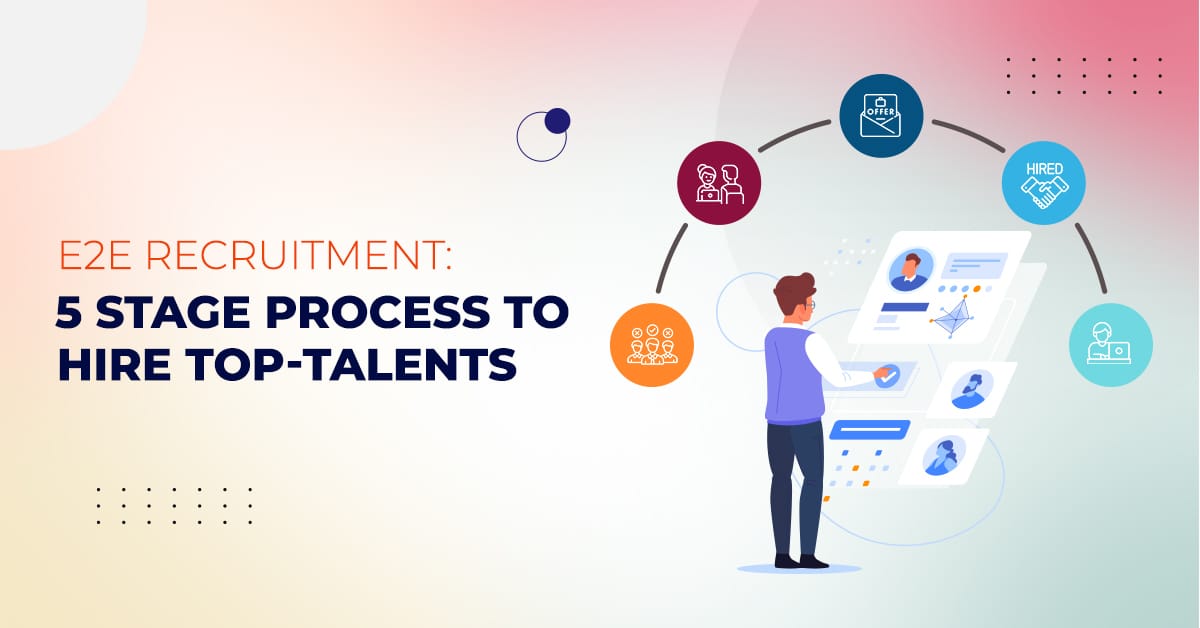
End to end recruitment covers the full path from deciding whether a role is needed to helping the selected person join successfully. The five stages are preparation and planning, sourcing, screening and selection, hiring, and onboarding.
What changes in 2026 is the standard inside each stage. Specialist employers need better role calibration, clearer evidence, responsible use of technology and tighter decision ownership. A process can look complete on paper while failing because the first stage never defined the work or the selection stage never agreed how evidence would be scored.
At a glance
- Stage one defines the business need, outcomes, evidence and process owners.
- Stage two maps the relevant pool before choosing sourcing channels.
- Stage three combines screening, structured interviews and a realistic work sample.
- Stage four turns evidence into a documented decision and credible offer.
- Stage five begins before the start date and continues through early integration.
- Every stage should protect candidate information and explain how technology affects decisions.
What is an E2E recruitment process?
It is the complete recruitment cycle from workforce need and role design through sourcing, selection, appointment and onboarding.
ISO 30405 describes recruitment as attracting, sourcing, assessing and employing people to meet organisational needs while fostering a positive candidate experience. It also emphasises preparation, management of phases and stakeholders, and review and learning.
That matters because the five stages are connected. Weak planning cannot be repaired by more sourcing. An accurate shortlist can still be lost through delayed decisions. A signed offer can still fail if the employer stops communicating during notice or begins onboarding without a clear mandate.
What are the five stages of the recruitment process?
The five stages are preparation and planning, sourcing, screening and selection, hiring, and onboarding.
Stage one: preparation and planning
Start with the reason for the role. Is the employer replacing a person, adding capacity, creating a capability or changing how a decision is made? Write the first year outcome before writing a list of credentials.
The plan should include the reporting line, location, working pattern, package, approval status, target pool, essential evidence, interview stages and decision maker. It should also distinguish what must be present on the first day from what can be learned through induction.
Stage two: sourcing candidates
Map the pool before selecting the channel. Applications may work for visible roles with broad supply. Direct approaches and specialist networks matter more when suitable people are passive, use varied titles or sit in another market.
The message should explain the work, not merely advertise the employer. State why the role exists, what the person will influence and why a credible candidate might consider moving. An accurate proposition also helps candidates rule themselves out early.
Record where candidate information came from, who can use it and how long it is needed. Technology can widen a search, but it should not collect information simply because it is available.
Stage three: screening and selection
Screen against the agreed criteria, then use selection methods that resemble the work. The Chartered Institute of Personnel and Development recommends clear, structured and transparent processes. Its selection guidance describes structured interviews, skill based tasks, psychometric tests and assessment centres, with the method chosen for the role and its validity.
A specialist process usually needs more than curriculum vitae matching. Ask a candidate to interpret a realistic problem, state missing information, make a recommendation and explain the controls or trade offs. Use the same core question and scoring criteria for comparable candidates.
Interviewers should score independently before the group discussion. This preserves the evidence trail and makes genuine disagreement easier to resolve. The guide to finding fit beyond the resume sets out a wider assessment approach.
Stage four: hiring
The hiring stage converts the assessment into an authorised decision. Compare evidence against the scorecard rather than choosing the most familiar background. Complete references, verification and any role specific checks under the applicable rules.
Prepare the offer around the terms discussed during the process. Explain the role scope, manager, location, working pattern, package, conditions and intended start. If a material point changed, disclose it before asking for acceptance.
Keep the rejected finalists informed promptly and respectfully. A person who is not right for this role may be right for another, and the quality of the decision should not depend on leaving other candidates without closure.
Stage five: onboarding
Onboarding begins after acceptance, not on the first morning. Maintain agreed contact through notice, complete practical preparation and introduce the people who will shape the new hire’s first weeks.
The employer should define success for the first 30, 60 and 90 days, access to systems and information, required training, early decisions, and how feedback will be given. For a senior or specialist hire, onboarding should also cover stakeholders, governance and the limits of authority.
Where does the five stage recruitment process fail?
It fails when employers treat the stages as administration rather than a connected decision system.
In our India specialist searches, the most common breakdown begins in stage one. A team opens sourcing before the interview panel has agreed whether it needs a technical producer, a reviewer or a decision owner. The disagreement then appears as repeated shortlisting and inconsistent feedback.
The guide to 2026 specialist hiring challenges covers these failure points in detail. The process page has a different job: it gives employers the sequence and the minimum output required from each stage.
How should employers use artificial intelligence within the five stages?
Use artificial intelligence for defined support tasks, test it before use and keep accountable people responsible for decisions.
The Information Commissioner’s Office found recurring concerns when auditing artificial intelligence tools used for sourcing, screening and selection, and the specialist hiring challenges guide carries that evidence in full.
Within the five stages, the practical question is narrower. Employers should know what a tool ranks, which data it uses, how performance was tested and where a person can review or challenge the result. Fix that at stage one, apply it at stages two and three, and record it in the stage four decision. The same standard applies to a purchased tool and an internally developed one.
How should employers measure an E2E recruitment process?
Measure whether each stage improves decision quality and movement, not only whether the vacancy closes.
Useful measures include the proportion of sourced candidates who meet the agreed evidence standard, time awaiting feedback, conversion between stages, offer acceptance, joining, early retention and reasons for withdrawal. Segment the data by role family and seniority, because one average can hide a blocked specialist search such as an actuarial or risk appointment.
The measures should lead to a change. If candidates repeatedly fail the same assessment, revisit the brief and sourcing pool. If approved candidates withdraw before offer, review decision timing and expectation setting. If joiners leave early, examine role accuracy and onboarding as well as selection.
Our specialist recruitment method follows the search from briefing through aftercare. For sustained hiring where the employer needs an embedded process, recruitment process outsourcing may be more appropriate than treating every vacancy separately.
Final thought
The five stage recruitment process works because it forces the employer to finish one decision before depending on the next. Planning defines evidence. Sourcing finds the relevant pool. Selection tests the work. Hiring closes an agreed case. Onboarding turns the appointment into operating capability.
The sequence should remain stable even when the detail changes by role. That consistency makes recruitment faster to learn from, easier to govern and clearer for candidates.
Frequently Asked Questions
Is a five stage recruitment process too slow for an urgent role?
No. Clear stages can reduce delay because the evidence, owners and decision points are agreed in advance.
Urgency may shorten the calendar, but it should not remove role calibration or a relevant evidence test.
Who owns onboarding in an E2E process?
The hiring manager owns the new hire’s operating integration, supported by human resources, recruitment and relevant control functions.
Assign each practical task, but keep one manager accountable for role clarity, access and early feedback.
When should a recruitment agency join the process?
A recruitment agency should join before sourcing when it is expected to calibrate the role, map the pool or advise on assessment.
Bringing the recruiter in after an unsuccessful campaign limits the opportunity to fix the original design.
Can selection be completed entirely online?
Yes, when the technology is accessible, the assessment remains relevant and candidates know what to expect.
Employers should provide a route for reasonable adjustments and an alternative when the chosen method creates an avoidable barrier.
Talk to us about your hiring
Get in touch →More reading
Related intelligence
-

Recruitment
Choosing a GCC location for specialist financial services work
Choosing a GCC Location for Specialist Work: Why Cost Is No Longer the Deciding FactorFor a long time,…
Read the article → -

Recruitment
Internal Audit and Risk Management Hiring in Bermuda: An Employer Guide for 2026
Bermuda insurers need internal audit and risk professionals who understand the business they challenge. That does not make…
Read the article → -

Recruitment
Catastrophe Modelling Talent in Bermuda
Catastrophe modelling has become a core commercial capability in Bermuda. Insurers, reinsurers and insurance linked securities managers use…
Read the article →